Archives 2014

Will yoga make you lose weight?

Yoga studios or shalas have sprouted just about everywhere. People practice yoga for spirituality, physical, and mental wellbeing, or weight management. In one of the conferences of the Nutritionist-Dietitians’ Association of the Philippines, a speaker talked about yoga and how some poses or asanas can stimulate our internal organs to secrete hormones that help keep our blood glucose (sugar) levels low but not to the point of experiencing hypoglycemia (very low blood glucose level).

Jonathan Cagas doing a handstand.

Jonathan Cagas doing a handstand.

Can yoga make you lose weight? Can it help improve some medical conditions? It takes a yoga expert to answer these questions.

I met Jonathan Cagas in 2011 when I started my Ashtanga Vinyasa Yoga practice at Yoga Manila. He patiently guided me until I evolved from being an awkward yoga student who didn’t know what she was doing, to a more confident one who could do “not so perfect” headstands.

In 2007, Jonathan completed a 200-hour teacher training certificate and a 100-hour advanced studies in yoga and philosophy from the Centered Yoga Institute in Thailand and obtained a certificate in pranayama from the Kaivalyadham Yoga Institute in India. On top of his yoga education, he has earned three masters degrees on Physical Education from the University of the Philippines (UP), Diliman in 2005, Sports Science major in Sport and Exercise Psychology from the University of Jyväskylä in Finland, and Sports Science major in Diagnostics and Intervention from the Leipzig University in Germany. The last two degrees were earned as part of the Erasmus Mundus European Masters in Sport and Exercise Psychology program. He is currently an assistant professor at the Department of Sports Science of the UP Diliman College of Human Kinetics.

Jonathan defines yoga as a holistic mind and body system that leads one to take care of the mental and physical aspects therefore promoting overall wellbeing. It all starts with Kriyas or cleansing techniques of the breathing system or nasal passages to remove excess mucus that blocks the flow of prana or breath.

Ashtanga Vinyasa Yoga is a popular gymnastic type of yoga developed by K. Pattabhi Jois focusing on asanas that first cleanse the body to make it healthy and strong. According to Jonathan, this practice was designed for regular people since it involves all the elements of breathing, asanas, and meditative. It is a low-moderate exercise that promotes flexibility and strength. Yoga is not aerobic, it will not make you burn as much calories compared to other types of exercises. “You can burn around three to four calories per minute,” Jonathan says. That’s at least 270 to 360 kcal in 90 minutes of practice. Not much right? So how can yoga make you lose weight?

“Yoga can make you burn around three to four calories compared to other types of exercises,” – Jonathan Cagas, Yoga guru

“Yoga can make you burn around three to four calories compared to other types of exercises,” – Jonathan Cagas, Yoga guru

Since yoga is a holistic system, the discipline encourages a plant-based diet. Jonathan used to be a lacto-ovo-vegetarian (consumes milk and eggs) for a long time and is now a pesco-vegetarian or pescetarian (includes fish). As you get deeper into the practice, you will learn to eat properly by making healthier choices and observing proper meal timing. In the early phases of my practice, I ate an entire chicken gyro sandwich and went straight to my class. I almost doubled over during practice.

The meditative aspect of yoga causes a down regulation of the brain’s hypothalamic system. The hypothalamus controls many metabolic processes including hunger and thirst. Stimulation of this part of the brain causes increased food intake and yoga causes an opposite reaction.

A study done by Alyson Ross, MSN, RN and Sue Thomas, FAAN, PhD, RN on The Health Benefits of Yoga and Exercise: A Review of Comparison Studies published at The Journal of Alternative and Complementary Medicine concludes that yoga may be as effective or even better than exercise in improving a variety of health-related outcome measures including heart rate variability, blood glucose, blood lipids (cholesterol and triglycerides), salivary cortisol (stress hormone), and oxidative stress (which causes the formation of free radicals). More studies are needed to examine the health benefits of the various types of yoga.

If you are contemplating on trying out yoga, here are some tips from Jonathan:

• Talk to the teacher and voice out concerns;

• Know the method and type of practice;

• Take Yin classes for relaxation; and

• Take Vinyasa classes for a more holistic approach.

[email protected]/www.cheshireque.com/IG:cheshirequerdn/Twitter:CheshireQue

Are you a couch champion?

It takes more than just dieting to lose weight. It takes more than just eating right to be healthy. We need to move! Let’s face it! Exercising is challenging for most people. I myself have to exert extra effort just to practice ashtanga vinyasa yoga and run on the treadmill whenever I can.
We all know that being physically active has a lot of health benefits and can decrease the risk of developing lifestyle related diseases. However, statistics show that 92.7 percent of Filipinos do not exercise regularly. Why? What prevents us from exercising or being physically active? What turns us into couch champions?

These are some of the reasons I have heard for the past 12 years of being a dietitian consultant:

I don’t have time.
I am not a gym person.
I don’t have the budget to pay for an exercise program.
I don’t have enough energy.
I am too lazy.
Exercising is no fun.
I have an injury or medical condition that prevents me from exercising.

Time is our number one obstacle. If we don’t find time, we will never be able to start anything. If you have been sedentary for a long time and keep a very busy schedule, it would be unrealistic to plan to exercise one hour every day, right? Begin by planning 10 minutes of physical activity (ex. brisk walking or going up and down the stairs) per day. As your mind and body gets conditioned and your schedule permits, gradually increase the duration until you reach a minimum of 30 minutes per day for five days a week. That is a total of 2 1/2 hours a week.

Going to the gym and having a structured program is very good but if you’re not a gym person or you want to save money, you can start by choosing an activity that you can do at home. If you like to dance, go ahead and use dance videos. Play interactive video games with your kids. Make use of the swimming pool in your area. There are so many enjoyable things you can do to burn energy at home.

It is important to eat right to fuel your body with energy when exercising. Don’t expect to be able to dance or brisk walk for an hour if you haven’t eaten anything. Some people say, eating something before and after exercising will defeat its purpose because you will just eat the calories which you have burned. This is so wrong! You need energy to endure the physical activity. If you are physically active then your metabolism increases which makes your body more efficient in burning calories not just during exercise but throughout the day. However, you should eat the right amount of food that your body needs because if you consume more, anything in excess will be turned into fat and make you gain weight despite exercise. Consult with a registered dietitian for your daily caloric requirement that is based on your physical activity.

Here’s a good opportunity to try and move those muscles and burn all that extra energy. Human Nature in cooperation with Gawad Kalinga presents #100andRising: Goodness Rising Zumba House Party. Get your most vibrant Zumba outfits ready and dance like no one’s watching. Not only will you be burning calories as you shake, shimmy, and sway for an hour and a half to high energy music, you’ll also be helping others as 100 percent of the proceeds will go to building concrete hope and homes for families in Ormoc, Leyte, and a new site in Barangay Cadiz Viejo, Cadiz, Negros Occidental. So make your way over to the Quezon Memorial Circle Covered Basketball Courts on August 2, 4:00 p.m. to 7:00 p.m., and be one with Human Nature as they build, dance, party, Zumba! Tickets are available at Human Nature Metro Manila / Luzon Branch or online at www.humanheartnature.com.

[email protected]/www.cheshireque.com/Twitter:CheshireQue

Fast Fat Facts

Our forebears used to have a very healthy diet derived from organically grown fresh produce and free range livestock. In those days words like cholesterol was uncommon. Then the Filipino diet was influenced by many cultures: Chinese, Spanish, Malay, and American.

Fast food restaurants and convenient stores are everywhere. Almost every household has canned and processed foods in the pantry and refrigerator. More Filipinos are developing heart diseases, diabetes, cancers, and other lifestyle related illnesses.
15Fast-Fat-Facts
Nowadays, it is no longer unusual for people to talk about how high their cholesterol or blood pressures are. Eighty percent of my patients have at least one condition that increases their risk of developing heart diseases. And just like a death sentence, being told to avoid fatty foods is enough to make someone feel depressed.

Aside from enhancing food flavors and promoting satiety, fat is needed to cushion and position our vital organs, and protect bones from injury. It protects our body from strong blows and impact and acts as an insulation to keep our body warm in cold temperatures. It is needed for the absorption of fat soluble vitamins A, D, E, and K. It is a concentrated form of energy which provides nine calories per gram.

Despite the health benefits of fat, everyone should consciously limit their amount of fat consumption as well as choose the type of fat included in their diet.

Fat comes from two sources: animal and plants. Animal sources contain fat, triglycerides, and cholesterol. Triglycerides are stored fat and cholesterol is a fat-like substance that is part of cells and hormones like sex hormones. Excessive amount of fat, triglycerides, and cholesterol in the body will cause high blood pressure and heart diseases.

Fat or fatty acids were not created equal.

Monounsaturated fatty acids (MUFAs) when substituted for saturated fats in the diet can lower total cholesterol. Canola, nuts, and olive oil are high in MUFAs.

Polyunsaturated fatty acids (PUFAs) lower total cholesterol and are found in corn, safflower, soybean, sesame, sunflower oils, and seafood.

There are two essential fatty acids which cannot be produced in the body. Omega 3 which is found in fatty fish (e.g. salmon, tuna, sardines, trout), walnuts, flaxseed oil, canola oil, and soybean oil keeps the brain and nerves healthy, lowers triglycerides, and total cholesterol. Omega 6 also lowers total cholesterol. It is found in dairy foods, sunflower oil, corn oil, beef, and lamb.

Saturated fat increases total cholesterol specifically the bad cholesterol. Sources are meat, poultry, butter, whole milk, dairy products, palm oil, and coconut oil. However, coconut oil is a medium chain triglyceride which is a type of fat that is easily metabolized by the body therefore consumption in small amounts may be beneficial.

Trans fat is produced by processing fat which makes it more saturated. Trans fat increases total cholesterol. It may lower the good cholesterol thus increasing the bad cholesterol. Naturally occurring trans fat in beef, pork, lamb, butter, and milk don’t have the same effect on cholesterol levels compared to processed food and some baked goods.

It is important to combine the different types of fats in the diet and to consume them in moderation. Limit intake of high fat foods like processed meat products, deep-fried foods, fries, pizza, burgers, chips, baked products, instant, and convenient foods to less than once a week. Try foods that are prepared with less fat and flavored naturally.

This July, The Marriott Manila features authentic American cuisines that are way different from the usual high-fat fast food items we are so used to. Chef John Havens created menus that have been flavored using herbs and spices like Marriott Cafe 13 Spice rub, herbs spice, and Cajun spice and healthy unsaturated fats like rosemary oil, truffle oil, and pomace olive oil. The All-American Buffet Dinner at Marriott Cafe is available from Sundays to Thursdays.

[email protected]/www.cheshireque.com/Twitter:CheshireQue

Go Green

The Vegetarian Lifestyle

I believe that God has initially intended for men to be vegetarians. As I quote from the book of Genesis 1:29, Then God said, “I give you every seed-bearing plant on the face of the whole earth and every tree that has fruit with seed in it. They will be yours for food.” During those times, men lived up to almost a thousand years old.

8Vegetarian-Lifestyle
Then came the great flood during Noah’s time and after the flood, God had allowed men to eat meat as written in Genesis 9:3, “Everything that lives and moves about will be food for you. Just as I gave you the green plants, I now give you everything.” During that time until today, man’s lifespan has decreased probably and partly due to the excessive consumption of meat.
Being a dietitian consultant for the past 12 years, it’s not uncommon for me to have people asking if they should adapt a vegetarian lifestyle. You might be asking the same question in your minds right now, too! Well, should we all switch to vegetarianism?

People choose to become vegetarian for religious beliefs, health, philosophical, and ethical reasons. What we need to understand is this: Being a vegetarian is not all about eating vegetables only. It is a complex way of eating that has tremendous health benefits but also poses serious health risks when done the wrong way. The vegetarian way of eating helps in weight management, reduce risk of heart diseases, and lower blood pressure.

There are several types of vegetarian:

Strict vegetarian or vegan excludes all animal products such as meat, poultry, fish, eggs, milk, cheese, and other dairy products from the diet. Honey is also not included.

Lacto-vegetarian excludes meat, poultry, fish, and eggs but includes milk and dairy products in the diet.

Lacto-ovo-vegetarian excludes meat, poultry, and fish but includes eggs, milk, and dairy products.

Flexitarian is a semi-vegetarian diet with occasional consumption of meat, poultry, or fish.

A vegetarian diet is sufficient to meet nutrient requirements however when done incorrectly will lead to nutrient deficiencies of protein, iron, calcium, vitamin B12, and vitamin D.

Protein needs can be met by eating whole grains, vegetables, beans, soy products, nuts, and seeds, dairy products, and eggs.

Iron can be obtained by eating green leafy vegetables, fortified cereals, enriched bread, and whole grains, beans, eggs, and peanut butter. It is important to eat vitamin C-rich foods like citrus fruits and tomatoes to enhance the absorption of iron.

Calcium daily requirements can be met by eating broccoli, green leafy vegetables, beans, nuts, seeds, calcium fortified soy milk, rice milk, almond milk, low fat milk, yogurt, and cheese.

Vitamin B12 is abundant in meat, eggs, and dairy products that is why strict vegetarians or vegans need to put more effort in meeting their daily requirement by eating cereals, soy milk, meat analogs, and foods that have been fortified with Vitamin B12 (cobalamin).

Vitamin D deficiency is common among people who do not get sufficient daily exposure to sunlight. Vegetarians can get Vitamin D from eggs and products fortified with Vitamin D such as soy milk, dairy products, orange juice, and breakfast cereals. Exposing your hands to sunlight for 10 to 15 minutes everyday can also help.

Now then, should we all become vegetarian? Eating lean meat in moderation has health benefits as well as making eating pleasurable too. Being a flexitarian myself, I suggest that you carefully think about the reasons why you want to adapt a vegetarian lifestyle and how committed you are. Do not turn yourself into a vegetarian overnight. Gradual transition is important in order to sustain this type of eating lifestyle. Do not do it on your own. Consult a registered nutritionist-dietitian who can guide you and help you ensure that all your nutritional requirements are met.

Lastly, learn how to read nutrition labels. Just a little precaution. Not all products labeled vegan or vegetarian are healthy. Some of them may be high in sugar or fat which we all know increases caloric intake and may wreak havoc with health.

([email protected], www.cheshireque.com, Twitter:CheshireQue)

The Safe Shopper

Shop smartly by shopping safely

Smart shopping is not just about healthy food choices and getting value for money. It also includes food safety. The way we select foods based on physical qualities, the duration of travel when transporting grocery items down to proper storage matters a lot. After all, a “safe shopper” takes food safety seriously.
1Safe-shopper

Ever experienced getting an upset stomach without knowing what caused it? Being a safe shopper will help prevent foodborne illnesses. Make sure you smartly pick foods that go into your shopping cart and all the way to your kitchen.
Before shopping

• Choose a clean shopping cart. Some shoppers tend to leave litter, spilled liquids, and dirt on used carts.

• Place two baskets inside your shopping cart to serve as a container for wet/frozen/refrigerated food items and for fresh produce (fruits and vegetables).

•Make sure you have enough reusable bags for the different food items you will purchase: Fresh, frozen, refrigerated, and dry. This will prevent cross contamination of micro organisms that could make you and your family sick.

Shopping time

• Shop for non-perishable items and dry goods first. Check packaging and never buy stuff with holes, tears, cuts, open lids, or open corners. Safety seals in bottles and jars should be intact.

• Check the expiry, best before, or sell by date especially for milk and dairy products.

• Check eggs for cracks and dirt. Egg trays or cartons should feel cold to touch.

• Never buy canned foods that are dented, damaged, rusted, or swollen. They may contain bacteria that cause botulism—a food borne illness that causes paralysis and is potentially fatal.

• When buying fresh produce, it’s better to choose the fruits and vegetables yourself rather than buying packaged ones to make sure they’re at their best quality. Check for bruises, cuts, or molds. If you plan to buy fresh produce from the market, buy them in the morning to ensure freshness.

• Buy refrigerated, frozen, and deli products toward the end of your shopping.

• Select fish and seafood that are intact, shiny, and firm. The odor should smell fresh and mild not strong and fishy. They should be stored in a chiller/refrigerated case or surrounded with ice.

• Select meats and poultry that look pink and not grayish. Packaged meats and poultry should be wrapped tightly and feel cold to touch.

• Opt to have meats, poultry, fish, and seafood packed into smaller serving sizes instead of in bulk. For example: If you buy 1 kg of meat, you can have it weighed and packed into four 250g serving sizes. It will be easier to store, thaw, and cook in the future.

• Check frozen food for ice crystals which is a sign that it has thawed then refrozen and was not stored in proper cold temperature.

After shopping

• In the check-out counter, take charge of how your purchases are packed. Don’t be passive.

• Pack meats, poultry, fish, and seafood in separate reusable bags or plastic bags. Frozen foods can be wrapped in paper bags to keep the temperature cold.

• Starchy vegetables should be packed separately from leafy ones to prevent bruising and wilting.

• Perishable foods should be brought home within 30 minutes from the time you check-out. If your travel time will take longer, bring along a cooler, ice box, or thermal bag with ice or artificial ice to keep your food cold on the way home.

• Never put cold foods in the trunk if you don’t have a cooler. Put them all in the backseat of your car.

• Immediately refrigerate and store perishable items as soon as you reach home.

Keep these simple and practical tips in mind next time you go to the market, grocery or supermarket. Shopping safely is shopping smartly!

([email protected]/www.cheshireque.com)

Smart Shopping

The Psychology of Grocery Shopping

It pays to have some “nutrition sense” when grocery shopping. Why? You get value for money not only in terms of quantity but also in the quality of foods that you purchase.

Your grocery bill is so long but do you actually pay for items that will keep you well nourished and healthy? Does grocery shopping contribute to your weight issues? It’s about time you carefully examine what goes into your shopping cart.
A “nutri-sensible shopper” should be well prepared before hitting the grocery or supermarket. 24Smart-Shopping

If planning menus and listing ingredients are tedious, at least take a few minutes to check the refrigerator and pantry for items that need to be restocked. Make a list of things that you need to buy. This will save you time when you do your actual shopping and will help you stick to your budget.

Never go to the grocery when you’re hungry. You will surely mindlessly grab high sugar, high fat and high caloric foods that will visually satisfy your hunger. You will end up eating these on your way home or as soon as you get home which will make you consume more calories unnecessarily. Trust me, I was guilty of this many times in the past. Shop after you’ve had a meal or a snack.

If time permits, shop during off peak hours and days. It is less stressful. Morning, late night, and weekdays are the best times. When your mind is relaxed, you are more capable of making wise decisions when choosing food items. You are likely to be more conscious about making healthier food choices.

A “nutri-sensible shopper” thinks twice before succumbing to marketing ploys that encourage one to buy more than what is needed. Consider the size of your family. If you live alone, it doesn’t make sense to buy large quantities of fresh produce that will leave you with a lot of spoilage just because it costs less per piece when bought in bulk. As for dry goods that may be on sale, check the ‘best before date,’ ‘sell by date,’ ‘best used by date,’ or ‘expiry date.’ You may purchase more if the shelf life is still within a reasonable length of time. Just remember to practice first in-first out rule at home.

Being organized is a skill that a “nutri-sensible shopper” should possess. To ensure that you get your shopping cart packed with nutrients from healthy food choices, organize your purchases into six categories:

Fresh produce includes all fruits and vegetables. Choose vegetables from the five subgroups: dark green vegetables; starchy vegetables like potatoes, corn, green banana; red and orange vegetables; beans and peas; and other vegetables like onion, mushroom, okra, and cucumber. To ensure freshness, buy fresh produce once or two times a week. Try a new variety of fruit every week. Buy ripe fruits that can be eaten within three days and buy semi-ripe fruits which will last up to a week.

Starch and grains include rice, cereals, noodles, pasta, breads, and baked products. Choose high fiber and multigrain variety. Black, red, and brown rice are good sources of dietary fiber.

Dairy includes milk, milk products, yogurt, and cheese. Choose the ones labeled non-fat or low-fat.

Protein foods include fish, seafood, egg, chicken, turkey, beef, and pork. Choose lean cuts with visible fats trimmed off. It is important to purchase a variety of meats in order to limit intake of pork and beef to no more than three times a week. Canned fish is better than canned processed meats which are high in fat and sodium.

Fats and oils include margarine, butter, mayonnaise, and cooking oils. Choose the ones that are plant-based, reduced fat, and vegetable oils to reduce saturated fat and cholesterol.

One more thing before you check out. Resist the temptation of grabbing sweets on display at the check out counter. You are just probably acting on impulse! Be nutrition sensible! Happy healthy shopping!

[email protected]/www.cheshireque.com

Hard as a rock

Kidney stones can’t break your bones but it sure can mess with your diet!

Filipinos call it “sakit sa bato.” Medically speaking it’s called urolithiasis, nephrolithiasis or ureterolithiasis depending on the location in the body. This is a very common disease mostly found in men but may also affect women. Symptom is severe pain at the side, back, lower abdomen and groin area. Frequent and painful urination may also be experienced.

Ever wondered how we get kidney stones? Let us take a quick tour of our urinary tract system and discover how kidney stone formation happens. The urinary tract is composed of four parts:

Kidneys are two bean-shaped organs located below the ribs. (Feel the lower part of your ribs and imagine your kidneys at the middle of the back part). Kidneys are responsible for removing wastes and extra water from the blood in the form of urine which is excreted from the body.

Ureters are small tubes that carry urine from the kidneys to be stored.

The bladder is triangle-shaped and used as a storage place for urine. It stretches and expands depending on the volume of urine.

The urethra is a tube where urine passes through to be removed from the body as waste. In women, urethra is only used for urinating while males use it for urination and ejaculation of semen.

Kidney stones are formed when minerals crystallize resulting from increased urine concentration due to inadequate fluid intake. High sodium (salt) intake and high doses of Vitamin D also increase risk. The most common type of stone is calcium combined with oxalate or phosphorus. These minerals are obtained from normal food intake. In adequate amounts, these minerals are important to maintain healthy bones and muscles.

If you suspect that you have kidney stones, seek medical help immediately for proper assessment and treatment.

Nutrition intervention is essential in managing and preventing kidney stones. Only a registered nutritionist dietitian can recommend diets related to this condition.

To prevent kidney stone formation and to help break it down and facilitate excretion through the urine, drink at least 2.5 liters or 10 cups of water. If you perspire a lot and during hot weather conditions, more fluids should be consumed.

Some foods need to be avoided or consumed in less amount depending on the type of kidney stone.

Calcium containing foods like dairy products may be lessened but not totally avoided. Calcium supplements must be avoided.

Oxalate containing foods are mostly from plants. Avoid or limit the following foods: nuts, green beans, sweet potato or kamote, turnip, spinach, beets, carrots, okra, tomatoes, pumpkin, rhubarb, parsnips, parsley, celery, strawberries, grapefruit, plum, prunes, raspberries, tangerine, orange, and lemon peel; juices such as orange, cranberry, grape and grapefruit; breads and baked products containing wheat bran; chocolate, coffee, carbonated beverages, alcohol, tea, bagoong, fish sauce or patis, soy sauce.

In some cases, kidney stones are formed from uric acid called uric acid lithiasis or stones. This occurs in people with gout, a form of arthritis that affects joints. The kidneys are unable to effectively excrete uric acid.

Since uric acid is formed when purine is broken down in the body, a purine controlled diet should be adapted as part of treatment for uric acid lithiasis. The following foods with high purine content must be avoided: liver and glandular organs; anchovies; sardines; and meat extracts.

Foods that contain moderate purine must be consumed in moderation such as: fish and seafood, lean meat, chicken and other poultry, beans, tofu, soy, peas, asparagus, mushrooms, cauliflower, spinach, and oatmeal.

17Food-to-avoid-Food-to-consume

The previously listed foods should not be avoided or limited unless you have kidney stones. These foods are rich sources of nutrients that are beneficial to the body but should always be eaten in moderation and as part of a well-balanced diet for normal individuals.

Make an effort to drink lots of water even when you’re not thirsty. Remember that proper hydration is prevention!

Bone appetit!

When we’re at the peak of our youthfulness we barely give much thought to our bone health. When my brother and I were still kids, I wasn’t a big fan of milk so I gave him my share every day during breakfast. I was reed thin and he was, well, chubby and cute! Had I known that my bone mass would be low when I reach adulthood, I would have drank his share to double up my portions.

We reach our peak bone mass at the age of 30. Beyond that, we lose bone mass more rapidly than we gain. Bone remodeling is a lifelong process of breaking down old bones and forming new ones. Low bone mass simply means having brittle, less dense, and weak bones that puts us at risk of developing osteoporosis and fractures in later years. Osteoporosis is a condition that weakens the bones. Asian women are at high risk for developing osteoporosis. Common risks also include smoking, alcohol intake, sedentary lifestyle, and low intake of calcium food sources.

Teens need 1000 mg of calcium everyday to help in bone formation. Adults ages 19 to 49 need 750 mg per day to help make bones stronger. At the age of 50 to 64, women need more calcium than men, 800 mg and 750 mg, respectively. Older adults age 65 and above need 800 mg per day to slow down bone loss.

Calcium requirements can be met through a diet composed of calcium rich foods however, if the diet does not provide enough calcium, supplementation may be needed through the proper guidance of a physician or registered nutritionist dietitian.

Calcium-rich foods and calcium content:

300 mg each:

1 cup milk

1 cup yogurt

1 cup calcium fortified soy milk

2 slices of cheese

200 mg each:

checkbook-sized salmon

6 pcs sardines

150 mg each:

1/2 cup tofu

1/2 cup cooked spinach

100 mg each:

1/2 cup frozen yogurt or ice cream

1/4 cup almonds

50 mg each:

1 pc. orange, medium

1/2 cup cooked broccoli

Two to three cups of milk plus consumption of other foods containing calcium like green leafy vegetables is enough to meet daily needs. Always choose low fat or non-fat milk and dairy products.

If you have lactose intolerance or experience stomach upset (diarrhea, gas, bloating) after consuming dairy products, try to eat or drink dairy products in small amounts and include them during meal times. It will help you digest lactose (sugar found in milk) better. You can also take lactose free dairy products or lactase enzyme tablets.

Calcium does not work alone. It needs the help of other nutrients such as vitamin D, vitamin K, potassium, flouride, and magnesium. Requirements for Vitamin D or the sunshine vitamin can be met through sun exposure for 15 minutes every day. Food sources of Vitamin D are milk, egg, and fatty fishes like tuna, salmon, and sardines.

To ensure healthy bones, keep these three things in mind:

• Consume calcium-rich foods everyday

• Engage in weight bearing exercise and be physically active

• Avoid smoking and alcohol

[email protected]/www.cheshireque.com

Eating Disorders Vs Disordered Eating

Since time immemorial, society has placed a premium on beauty especially among women. It could be seen as a blessing and be used to one’s advantage but could also bring about misery and self-destruction. To quote a dear friend, “Beauty has become a part of a woman’s daily necessity. To be beautiful inside and out requires meticulous touch.” But just how much is too much? When does the pursuit of beauty become detrimental to one’s health?

Whether in denial or deliberately choosing to conceal the truth, we can’t discount the fact that our society is full of people obsessed with being beautiful and suffering from a condition known as disordered eating. While disordered eating is a serious health threat, it is not considered a disease although it could lead to life-threatening medical conditions, which fall under one category: Eating Disorders.41

THREE TYPES OF EATING DISORDERS

Anorexia Nervosa is characterized by extreme obsession with being thin and food restriction. People with this condition are in denial of hunger to the point of starvation. They may engage in excessive exercise, withdraw from society, and manifest intense fear of gaining weight and eating in public. They may have trouble sleeping and show lack of emotion or, at times, become irritable. This may also lead to loss of menstruation or amenorrhea among women. Being a perfectionist is a common trait.

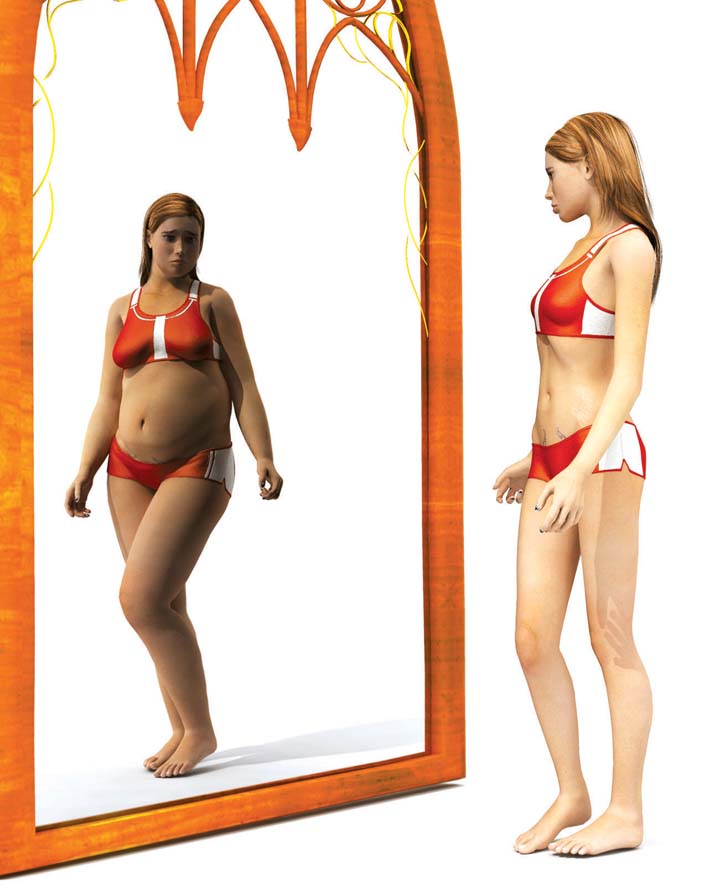
Famous singer Karen Carpenter died of heart failure brought about by Anorexia Nervosa. Just like her, people with this illness look frail thin. Some develop soft downy hair on the body called lanugo. They could look at themselves in the mirror and still think they are overweight, thus causing a negative perception of one’s self or distorted body image.

Bulimia Nervosa is evident among people who eat large amounts of food in a short time (bingeing) and getting rid of the food or calories by self-induced vomiting (purging), use of laxative, or excessive exercise. These people are usually within a normal weight range or may be a little bit overweight.

A person with Bulimia Nervosa eats high fat and sugary foods and doesn’t stop until s/he feels pain or discomfort. Damaged teeth and gums and callused hands from purging are warning signs to look watch for.

Guilt is the enemy. After bingeing and purging, guilt sets in which the person feels compelled to give in to his/her emotions and the cycle goes on and on.

Eating Disorders Not Otherwise Specified (EDNOS) is the third type of eating disorder. This includes binge-eating disorder and nocturnal (night) eating syndrome.

Binge-eating disorder is characterized by consumption of large amounts of food within two hours accompanied by a sense of losing control. One may feel discomfort and disgust after eating rapidly, eating along, and eating when not hungry. This is different from overeating, which is usually done in parties and social functions. Rather, binge-eating is done in secret coupled with negative emotions.

Nocturnal (night) eating syndrome consists of morning anorexia, extreme hunger in the evening, and insomnia. This condition may be exacerbated by stress.

These psychological illnesses need to be properly diagnosed and treated by a team of health professionals that can competently address the medical, emotional, and nutritional needs of the individual.

Now, you may not have an eating disorder but you could still be at risk of having disordered eating symptoms which could affect you mentally and physically. Ask yourself these questions:

1. Do you engage in yo-yo dieting?

2. Does your weight fluctuate frequently?

3. Do you follow an extremely restrictive and unhealthy diet plan?

4. Do you follow an extremely rigid exercise program?

5. Do you feel guilt and shame when you’re unable to maintain a “healthy” diet and “good” exercise habits?

6. Are you preoccupied with food, body image, and exercise thus causing you distress and negativity?

7. Are you an emotional eater?

8. Do you use exercise, food restriction, fasting, purging, diet pills, or laxatives to compensate for “excessive” eating?


If you answered yes to any of these questions, I suggest you seek professional help. Consult with a Registered Nutritionist Dietitian for counseling and proper nutrition intervention.


[email protected], www.cheshireque.com

Understanding gluten-free

We have all seen products that are labeled gluten free. Are these products beneficial or harmful to our health? A lot of people think that when a product is labeled as gluten free then it’s healthy. Well, I’d say, not necessarily. It is important to know the reason behind the consumption of these products.

27Gluten-Free-300x202Gluten free products are big in the market now. I have talked to a lot of people buying gluten free products for many reasons but not one of them gave me the only reason why one should go on a gluten free diet—Celiac Disease! In my 12 years of practicing as a nutritionist-dietitian, I have never encountered a Filipino with such a condition and I therefore conclude that Celiac Disease is not common in the Philippines. But why are we buying gluten free products? What for?

Celiac disease is a genetic condition wherein the body’s immune system reacts to gluten, a protein found in wheat, rye and barley. Wheat is used for making flour and the fermentation of beer. Flour, as we all know, is the main ingredient of breads, cakes, cookies, other baked products, noodles, pasta and breakfast cereals. Next to rice, Filipinos consume large amounts of the products that I have mentioned and yet gluten sensitivity is still not common among Filipinos. A person may also be sensitive to gluten but not actually show any signs and symptoms.

When a person with Celiac Disease eats wheat, rye or barley, the gluten causes the immune system to damage the lining of the small intestine thus causing stomach pain, diarrhea, fatigue, joint pain and a skin condition called dermatitis herpetiformis characterized by itchy skin rashes. Celiac disease puts a person at risk of having nutrient deficiencies since most of the nutrients we get from food are absorbed in the small intestine. A gluten-free diet is used as a treatment to relieve symptoms of Celiac Disease.

Although not yet proven and further research is needed, some people claim that going on a gluten-free and casein-free diet (GFCF Diet) have relieved symptoms of autism, a condition affecting brain function, social and communication skills. Casein is a protein found in milk. Since the GFCF diet is not yet proven effective in treating this condition, it is best to talk to a Registered Nutritionist-Dietitian to prevent nutrient deficiencies. Adapting a casein free diet and removing milk and dairy products from one’s diet may be detrimental to your health. Milk is very rich in calcium, which is needed to maintain bone and muscle health.

Recently, gluten-free diet has been linked to athletic performance. Some athletes claim to have improved their performance after excluding gluten from their diet. Further studies are needed to prove this claim. Therefore, it is not necessary for athletes to adapt a gluten free diet. Proper sports nutrition as well as training would result to optimum performance.

Buying and eating gluten-free products may not be harmful. However, when one chooses to go on a gluten-free diet, it is important to make sure that food intake is still well-balanced to prevent nutrient deficiencies. Other carbohydrate sources like rice, starchy vegetables like potato or corn and gluten-free bread and gluten-free pasta can be substituted for products that contain gluten.

It is important to be well informed about products and labels before accepting them as part of one’s lifestyle.

[email protected]

www.cheshireque.com